
What Is Paramedical Tattooing? Scar and Vitiligo Camouflage Explained | Edmonton
Scars, stretch marks, and vitiligo are all completely normal parts of being human. But if a mark on your skin makes you feel self-conscious every time you look in the mirror, you are not vain for wanting to change how it looks. At Studio Vanassa in Edmonton, we offer paramedical tattooing specifically to help people feel more comfortable in their own skin.
Paramedical tattooing is one of the most rewarding services we do, because the change is not just cosmetic. When a client looks at a camouflaged scar for the first time and tears up, that never gets old. Here is everything you need to know about how it works.
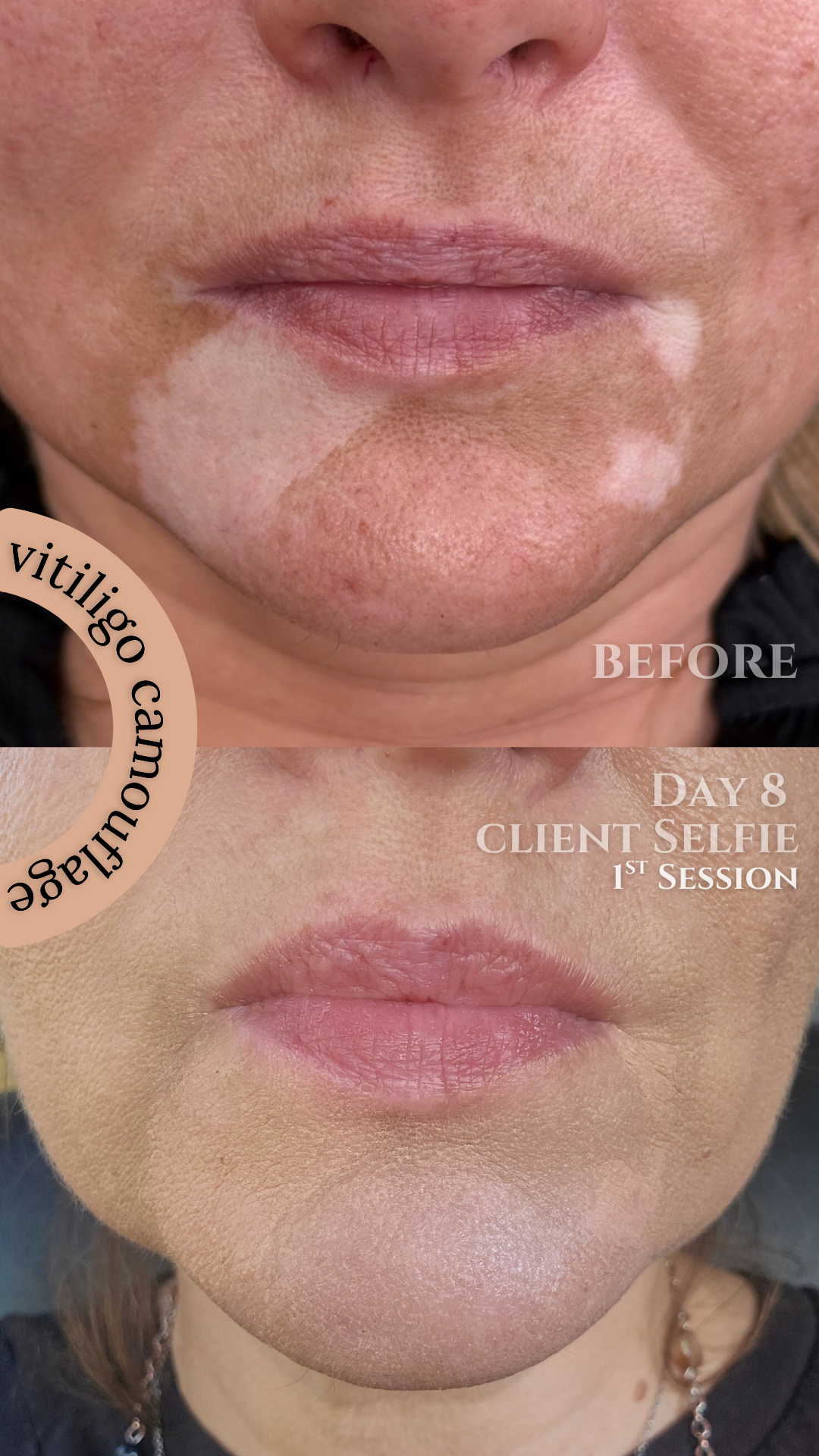
Vitiligo Transformation
Before and After
What is paramedical tattooing?
Paramedical tattooing is a specialized form of cosmetic tattooing that uses pigment implanted into the skin to correct or camouflage conditions caused by injury, surgery, or skin conditions. Instead of decorative art, the goal is restoration: making a scar, stretch mark, or area of pigment loss blend in with the surrounding skin so it draws less attention.
At our studio, paramedical tattooing includes scar camouflage, stretch mark revision (both inkless and pigment-based), areola restoration, scalp and beard micropigmentation, and vitiligo camouflage. We also treat acne scars and sun damage. Every treatment starts with a consultation, because these are medical-adjacent services and not every case is the right fit. We would rather turn someone away honestly than take their money for a result we cannot deliver.
How does scar camouflage work?
Scar camouflage works by depositing custom-blended pigment into the scar tissue so its colour matches the skin around it. Scars often look lighter or pinker than surrounding skin because the tissue heals differently, and pigment tattooing evens out that contrast.
The process is precise. We mix the pigment to match your skin tone in its natural, un-tanned state, and we build the colour gradually across sessions rather than going too dark too fast. Scar tissue takes pigment differently than healthy skin, so conservative layering gives the most natural result.
We also offer inkless scar and stretch mark revision, which uses a serum-based technique without pigment to encourage the tissue to remodel and soften. Some clients do inkless sessions first to improve the texture of a scar before adding camouflage pigment. During your consultation, we will tell you which approach makes sense for your specific marks.
What is vitiligo camouflage tattooing?
Vitiligo causes patches of skin to lose their pigment, leaving lighter areas that can be hard to cover with makeup. Vitiligo camouflage tattooing deposits pigment matched to your natural skin tone into those patches so they blend with the rest of your skin.
A few honest notes here, because this matters. Camouflage works best when your vitiligo is stable, meaning the patches have not been spreading or changing for a while. If your vitiligo is still active, we will recommend waiting, because new patches could appear after treatment. We also cannot guarantee an exact colour match on every skin tone, and pigment may fade or shift slightly over time. We will walk through all of this at your consultation and give you a realistic picture of what your results will look like.
Who is a good candidate for paramedical tattooing?
You may be a good candidate if your scar, stretch mark, or area of pigment loss is fully healed. For surgical scars, that usually means waiting at least 12 months after the procedure. The area should be flat and stable, not raised, keloid, or still changing colour.
You are likely not a candidate if your skin condition is still active or changing, if you have a keloid tendency in the area, or if you are currently pregnant or nursing. Certain medications and medical treatments can also affect eligibility, which is why the consultation matters so much. When you come in, we look at your skin in person, ask about your history, and tell you straight whether we can help.
Does paramedical tattooing hurt?
This is one of our most-asked questions. Most clients describe the sensation as mild scratching or vibration, very tolerable, and many are surprised by how comfortable it is. We use topical numbing to keep you comfortable throughout the session, especially on sensitive areas. Scar tissue itself often has reduced sensation compared to healthy skin, which makes the process easier than most people expect.
How many sessions will I need?
Most camouflage work needs two to three sessions. The first session lays down the base colour, and follow-up sessions refine the match and build density where needed. We space sessions several weeks apart so the skin can heal fully between visits and we can see the true healed colour before adding more.
This is important: touch-up sessions are charged separately, not included free with the initial appointment. We will always quote you transparently so you know the full investment before we start.
How long do paramedical tattooing results last?
Camouflage pigment typically lasts one to three years before it starts to soften, depending on the area treated, your skin type, and sun exposure. Areas that get a lot of sun fade faster, so daily sunscreen on the treated area makes a real difference to how long your results last. Periodic refresh sessions keep everything looking seamless.
Frequently asked questions
Can paramedical tattooing completely erase a scar?
No, and be wary of anyone who promises that. Camouflage reduces how noticeable a scar is by evening out its colour with the surrounding skin. The texture of the scar remains, but most clients find that once the colour contrast is gone, they stop noticing it day to day.
Is vitiligo camouflage suitable for darker skin tones?
It can be, but colour matching is more complex on deeper skin tones, and we are upfront about that. During your consultation we test and discuss what match is realistic for your skin. An honest consultation matters more than a quick yes.
How should I prepare for my appointment?
Arrive with clean skin and no fake tan, self-tanner, or heavy skincare actives on the area. Avoid sunburn before your appointment, and bring reference photos if you have them. Most importantly, come ready to talk through your goals so we can plan the right approach.
How do I book a paramedical tattooing consultation in Edmonton?
Book through our website at studiovanassa.com or call us at (780) 297-8030. We are located on Whyte Ave in Edmonton, open Monday to Friday 10am-9pm and Saturday to Sunday 10am-6pm.
Ready to feel more like yourself?
If a scar, stretch mark, or vitiligo patch has been bothering you, you do not have to just live with feeling self-conscious about it. Book a consultation with us at Studio Vanassa on Whyte Ave in Edmonton, and we will give you an honest assessment of what paramedical tattooing can do for your skin. Visit studiovanassa.com or call (780) 297-8030 to get started.