
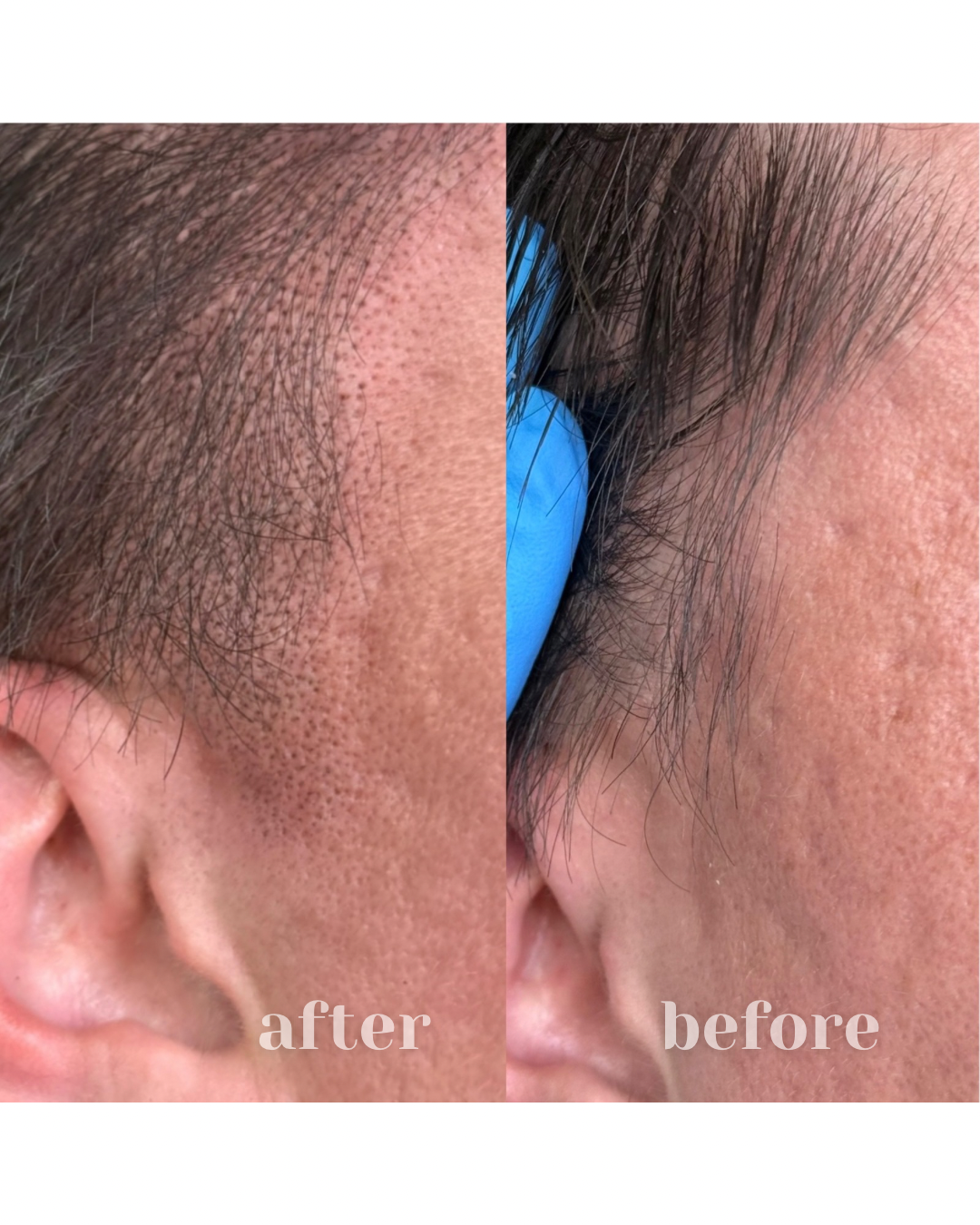
Added density to side burns and temples
Scalp micropigmentation, often called SMP, is a cosmetic tattoo technique that creates the look of fuller hair. It uses tiny dots of pigment placed in the scalp to mimic hair follicles, soften the look of thinning, and restore the appearance of a hairline. For many people in Edmonton, SMP is a way to feel more confident about their hair without surgery, daily fibres, or wigs.
This guide explains scalp micropigmentation in Edmonton, including what it is, who it is for, how the process works, what healing looks like, how much it costs, and what results to expect. If you are considering SMP, use this guide to prepare questions for your consultation at Studio Vanassa.
What Is Scalp Micropigmentation
Scalp micropigmentation is a form of cosmetic tattooing that places small, precise dots of pigment in the scalp. The dots are matched to your hair colour and skin tone, and they are placed in a pattern that mimics natural hair follicles. The result is the look of a closely shaved head, a denser hairline, or fuller coverage in thinning areas, depending on your goals.
SMP is not a hair transplant. It does not grow hair. It creates the illusion of hair density by adding pigment to the scalp. It works well for people who want a short, buzzed look, for people with thinning on the crown or hairline, and for people who want to camouflage scars from hair transplants or injuries.
The pigment used for SMP is designed for the scalp. It is placed in the upper layers of the skin, and it is applied with a fine needle and a machine. The artist controls the depth, spacing, and size of each dot to create a natural, even result. The work is detailed, and it requires training in scalp anatomy, colour theory, and hairline design.
Who Is Scalp Micropigmentation For
SMP is for men and women who want the look of fuller hair. It is commonly used for male pattern hair loss, receding hairlines, thinning crowns, and general thinning. It is also used for women with thinning hair, especially along the part line and crown. It can help people with alopecia, and people who want to camouflage scars on the scalp.
Good candidates are people in good health, with realistic expectations, and with a scalp that is healthy and fully healed. If you have active scalp conditions, open skin, infection, or recent surgery on the scalp, the artist may ask you to wait. If you are unsure whether SMP is right for you, a consultation will help. The artist will assess your scalp, hair, and goals, and advise whether SMP is a good fit.
SMP is not for everyone. If you want long hair, SMP will not give you that. It creates the look of short hair or density, not length. If you have very light blonde or grey hair, the artist will discuss how pigment matching works for your case. The consultation is where you and your artist decide on the best approach for your hair and skin.
What to Expect at Your Consultation
At your consultation, the artist will look at your scalp, ask about your hair loss history, and discuss your goals. Bring photos of the hairline or style you want, and be ready to talk about any scalp conditions, medications, and past hair procedures. The artist will explain how many sessions you are likely to need, what the result will look like, and what it will cost.
The consultation is also where you design your hairline. The artist will draw a proposed hairline and discuss shape, density, and placement. A natural hairline is not a straight line. It has soft edges, varied density, and a shape that fits your face and age. Take time at the consultation to get the hairline right, because it shapes the whole result.
How Scalp Micropigmentation Works: The Process
Session One: Foundation
The first SMP session lays the foundation. The artist cleans the scalp, marks the hairline and treatment area, and begins placing pigment dots in thin, even layers. The first session focuses on establishing the shape, density, and hairline. It may look lighter or patchier than the final result, because the pigment is still settling and the full density has not yet been built.
Session Two: Density and Refinement
The second session, usually one to two weeks later, builds density. The artist adds more dots, fills any areas that healed lighter, and refines the hairline and blend. This is where the result starts to look fuller and more natural. The artist will check the colour, spacing, and symmetry, and adjust as needed.
Session Three: Final Detail
A third session, if needed, adds final detail and evens the result. The artist fine tunes the hairline, adds density where needed, and ensures the blend is smooth from the hairline to the crown. Not everyone needs a third session, but it is common for larger areas or for clients who want a denser look. Your artist will advise how many sessions your case is likely to need.
Healing After Scalp Micropigmentation
Healing after SMP is usually straightforward. In the first days, the scalp may look slightly red, and the pigment may look darker than the final result. The dots may look larger or sharper at first. As the skin heals, the pigment softens and settles, and the result looks more natural.
For the first few days, avoid touching, scratching, or picking the scalp. Keep the scalp clean and dry, and follow your artist's instructions on when to wash. Avoid swimming, saunas, hot tubs, and heavy workouts for at least seven days. Avoid sun on the scalp while healing, and wear a hat if you are outside. Do not apply hair products, oils, or strong skincare on the scalp until cleared.
Light flaking is normal in the first week. Do not pick or peel. The true result is visible after healing is complete, usually two to four weeks after a session. At that point, the pigment has settled and the blend is stable. That is the right time to assess whether another session is needed.
How Much Does Scalp Micropigmentation Cost
SMP cost in Edmonton depends on the size of the area, the number of sessions, and the complexity of the work. A small area, such as a scar camouflage or a small thinning spot, costs less than a full scalp or a full hairline. A larger area needs more time, more pigment, and more sessions, which affects cost.
At your consultation, the artist will assess the area and give you a quote. Ask whether the quote includes the consultation, all sessions, aftercare, and any touch ups. Ask how pricing is structured, whether it is by area, by session, or by package, and whether there are payment options. A clear quote helps you plan and avoids surprises.
When you compare options, look beyond the lowest price. Look at the artist's training, before and after photos for cases like yours, reviews, and how clearly they explain the process and pricing. SMP is detailed work on a visible area, and skill and experience matter for a natural result.
What Results to Expect
After healing and follow up sessions, most clients see a fuller, more even hairline, a denser crown, or a clean buzzed look, depending on their goals. The result is immediate in the sense that you see pigment right away, but the settled result after healing is the true result. It should look natural up close and in photos, with soft edges and even density.
Results vary by person. People with darker hair and skin often see a stronger contrast and a more defined result. People with lighter hair may need a softer pigment and a more subtle approach. Your artist will discuss what is realistic for your hair and skin at your consultation.
SMP results are semi permanent. They usually last two to five years, depending on skin type, sun exposure, and skincare. The scalp gets sun, and sun can fade pigment. A hat and sunscreen on the scalp, once healed, help results last longer. A colour boost every few years keeps the result fresh. Touch up appointments are booked separately, and pricing is confirmed at the time of booking.
Frequently Asked Questions About Scalp Micropigmentation
Does scalp micropigmentation hurt?
Most clients find it tolerable. The scalp is sensitive in some areas, and the artist will explain comfort options at your appointment. Sessions are broken into manageable lengths, and you can take breaks.
How long does SMP take?
Each session usually takes two to four hours, depending on the size of the area. Most clients need two to three sessions, spaced one to two weeks apart for healing.
Will SMP look like real hair?
SMP creates the look of short hair follicles or density, not long hair. Up close, it looks like a closely shaved head or a denser scalp. From a normal distance, it blends naturally with existing hair.
Can SMP cover scars on the scalp?
Yes, SMP can camouflage scars from hair transplants, surgery, or injuries, by blending pigment over the scar tissue. Scar tissue can take pigment differently, so your artist will assess the scar at your consultation and may need extra sessions.
How do I maintain SMP?
Follow aftercare, protect the scalp from sun, and avoid harsh products on the scalp. Keep the hair short if you want the buzzed look, or keep your existing hair groomed to blend with the pigment. Book a colour boost when the pigment starts to fade.
Book a Consultation in Edmonton
If thinning hair, a receding hairline, or scalp scars are affecting your confidence, scalp micropigmentation may help you feel more comfortable. A consultation is the best next step. You will get an assessment of your scalp, a clear plan, a hairline design, and a quote. Contact Studio Vanassa in Edmonton to book a consultation. The studio team will walk you through the process, explain what to expect, and help you decide if scalp micropigmentation is right for you.