
Can Old Brow Tattoos Be Corrected or Neutralized?
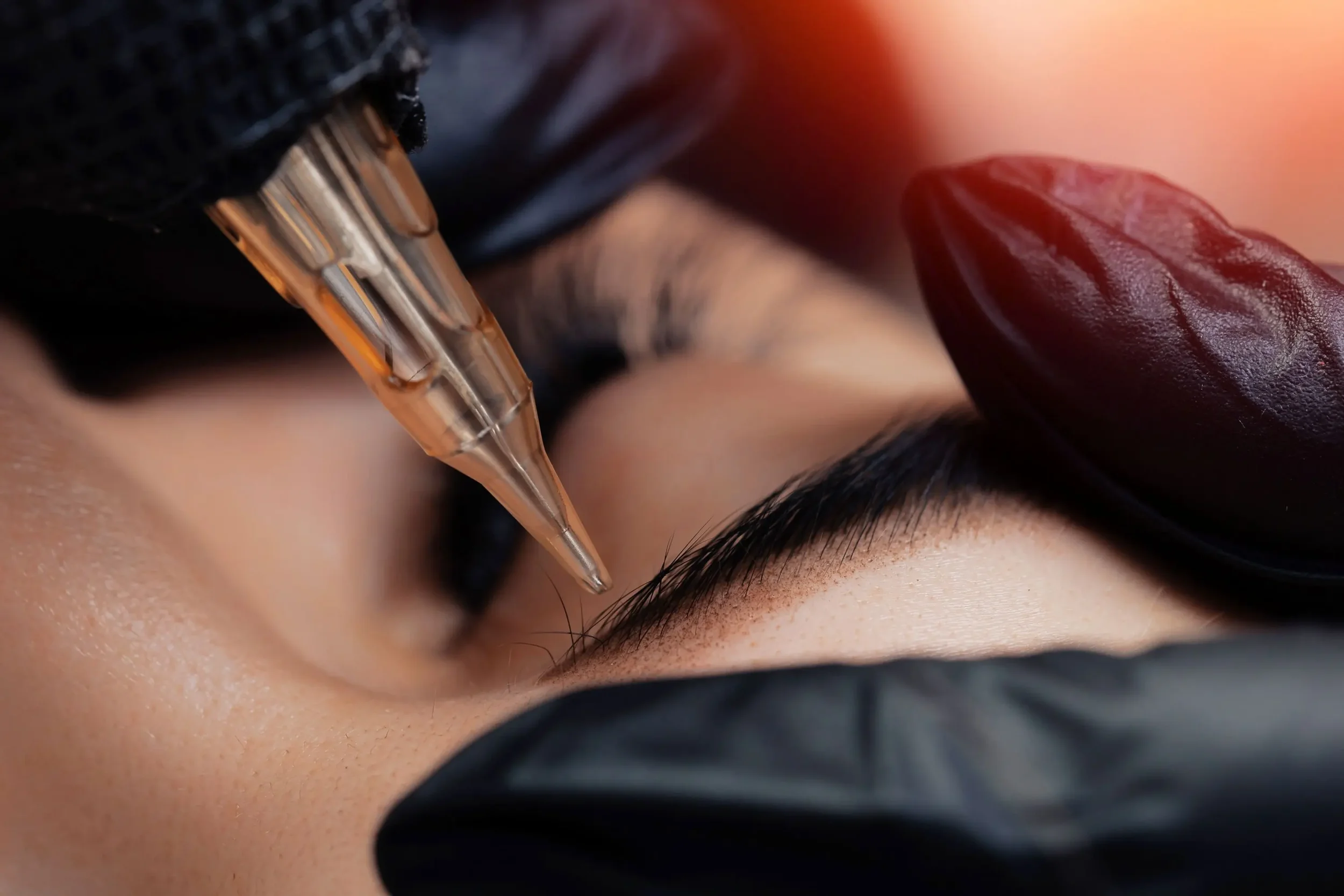
Old brow tattoos can often be corrected or neutralized depending on how the pigment has aged and how the shape sits on the face. This topic covers color shifting, blurring, and uneven structure, and explains when correction, neutralization, reshaping, or removal is required before new work can be done. Studio Vanassa approaches brow tattoo correction as a technical process focused on pigment behavior, skin response, and structural balance.
Why Old Brow Tattoos Change Over Time
Pigment used in cosmetic tattooing does not remain the same color or shape indefinitely. As the skin renews and the immune system breaks down pigment particles, different base tones remain visible. Warm pigments may fade toward pink or red, darker tones may cool toward grey or blue, and mixed blends can separate unevenly.
Shape also changes because pigment softens outward as the skin ages. Lines lose definition, edges blur, and placement that once suited facial proportions may no longer align with the current brow line. These shifts are normal outcomes of time, not necessarily signs of poor original work.
Common Problems Seen With Aged Brow Tattoos
The most frequent correction concerns fall into predictable patterns. Color issues include red, orange, grey, or blue tones that no longer resemble natural brow hair. These occur when certain pigment components fade faster than others.
Shape issues include tails that sit too low, fronts that appear blocky, or arches that no longer match natural muscle movement. Structural imbalance often becomes more noticeable as facial features mature.
Saturation problems include areas that healed darker than intended or sections that faded unevenly. This creates patchiness that prevents new pigment from being placed cleanly over the old work.
What Brow Tattoo Correction Involves
Correction is not a standard brow tattoo appointment. It is part of cosmetic tattooing services that account for existing pigment, skin condition, and structural balance. The goal is first to make the existing pigment workable, not to immediately add new shape or color. Treatment may focus on adjusting undertones, softening density, or visually rebalancing the structure.
New pigment is placed with consideration for how it interacts with the old layer. Skin tolerance, scar tissue, and pigment load determine how much change can be achieved in one session. Multiple sessions are common because correction builds gradually rather than covering aggressively.
Color Neutralization, When and Why It Is Needed
Neutralization is used when unwanted undertones are strong enough that a natural brow shade would heal distorted. Opposing tones are introduced in controlled amounts to visually cancel the dominant hue.
Red or orange brows typically require cooler corrective tones. Blue or grey brows often need warmth added before a natural brown can be used. Neutralization does not erase the old color, it shifts the visible balance so future pigment heals closer to the intended result.
This step is necessary when placing a standard brown would produce an unnatural finish due to the existing undertone.
Reshaping and Structural Corrections
Shape correction works within the boundaries of the previous tattoo. New structure can be refined, lifted, or softened, but major repositioning is limited if old pigment sits outside the desired design.
Technicians adjust symmetry, arch placement, and tail direction using strategic shading and line work. The aim is to guide the eye toward a balanced brow without overloading the skin. Correction can improve structure but cannot completely relocate a brow that was originally placed too high or too low without prior removal.
When Lightening or Removal Is Required First
If pigment is very dark, deeply implanted, or far outside the ideal brow shape, correction alone may not produce a controlled result. In these cases, saline lightening or laser removal is done first to reduce pigment density.
This step creates a lighter, more stable base for later cosmetic tattooing. Attempting to correct heavily saturated brows without lightening can lead to muddy color, excessive layering, or poor healing.
Removal is considered when existing pigment blocks new design options rather than simply needing color adjustment.
Limitations Based on Pigment, Depth, and Skin
Not all brows can be corrected to the same degree. Dark carbon based pigments resist color adjustment more than softer iron oxide blends. Deep placement limits how much visible change surface techniques can create.
Skin type also affects outcomes. Oily skin may blur detail faster, while scar tissue can hold pigment unpredictably. Very old tattoos may respond differently than recent work because the remaining pigment composition has already shifted.
These factors influence how many sessions are needed and how subtle or dramatic the final change can be.
Who Is and Is Not a Good Candidate for Correction
Good candidates have pigment that is visible but not extremely dense, and shapes that can be refined within the existing brow area. They understand that correction is progressive and may involve multiple stages.
Poor candidates include those expecting a complete color reset in one session, or those with large areas of misplaced pigment requiring full removal. Individuals with certain skin conditions, active irritation, or recent procedures in the brow area may need to wait before treatment.
Assessment determines whether correction, neutralization, or removal is the appropriate starting point.
What Results to Realistically Expect
Correction improves harmony, reduces unwanted tones, and refines structure, but it does not return the skin to a blank canvas. Faint traces of previous work may still influence the final appearance.
Results develop over several appointments as undertones are balanced and new pigment settles. The objective is a natural looking brow that works with the existing skin and pigment history, not perfection through heavy coverage.
Booking a Brow Tattoo Assessment
A consultation allows evaluation of pigment color, density, placement, and skin condition. Based on this, a plan can be outlined that may include neutralization, structural correction, or preliminary lightening. An in person assessment can be requested through the contact page to determine the safest and most effective sequence for brow tattoo correction.